
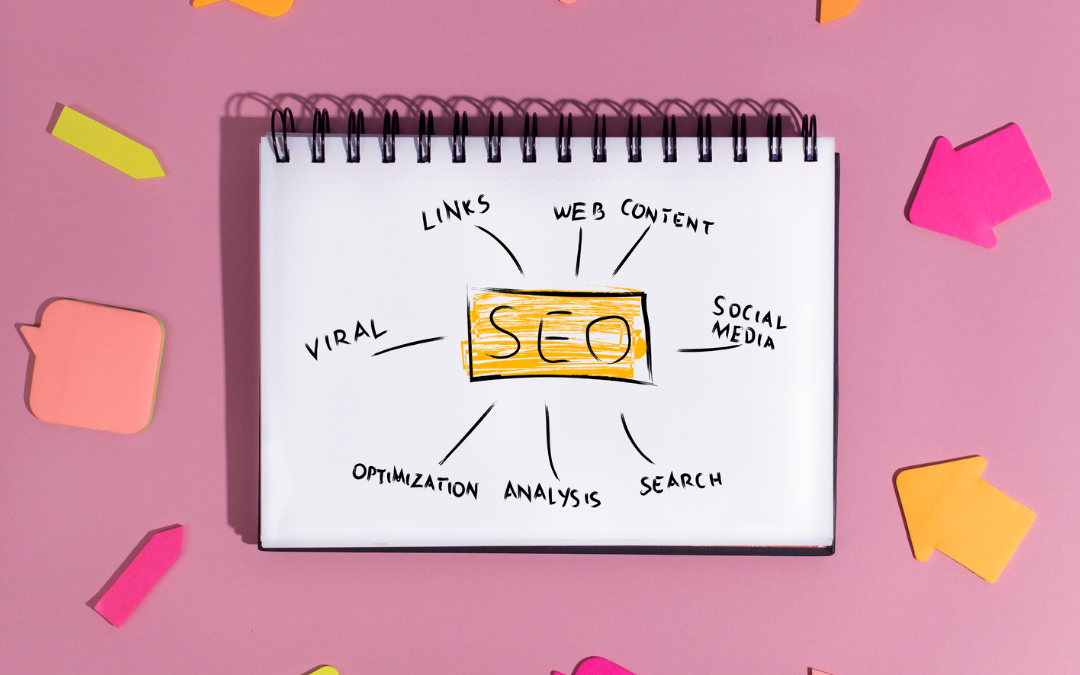
If I had a rand for every time someone announced that SEO, Google Ads, social media or some other form of marketing was dead, I’d probably have a very healthy retirement fund by now.
And more often than not, the person making the announcement just happens to have the next big thing they’d like you to spend your money on.
Meanwhile, business owners are left wondering what on earth they’re actually supposed to be doing. Should they stop spending money on Google Ads? Is SEO still worth investing in? Should they be putting everything into AI visibility instead?
The frustrating thing is that there isn’t a universal answer. There never has been.
So, is Google Ads dying?
Google’s recent Q3 2026 earnings announcement has prompted another round of speculation about the future of traditional search and Google Ads.
Google reported its strongest year-on-year growth in search queries for five years, largely driven by AI. But while Search advertising revenue still grew by 12%, that growth has slowed, and Google acknowledged that searches within AI Mode are currently generating less advertising revenue.
It’s an interesting development and certainly something the industry needs to pay attention to. But does it mean Google Ads is dying? I think that’s an enormous leap to make.
If you’re spending money on Google Ads and those campaigns are consistently bringing profitable business through the door, why would you stop simply because someone has declared that the channel is on its way out?
Of course, you should be paying attention to how people are searching, how AI is influencing buying decisions and whether your existing campaigns are still delivering the returns they should. But those decisions need to be based on what’s actually happening in your business, not on the latest headline.
We’ve seen first-hand why the data matters
We recently worked with a client where we’d been gradually transitioning some of their Google Ads campaigns from traditional Search to Performance Max (PMax).
Over a six-month period, some of the campaign metrics were improving. On the surface, things appeared to be moving in the right direction. But when we looked at the actual revenue being generated, the picture was very different. Revenue was down.
So we changed course, shifting more of the investment back towards traditional Search campaigns. In the first month, we saw an immediate improvement in results.
Now, that doesn’t mean PMax doesn’t work. It absolutely can, and for some businesses it’s an excellent option. But in this particular case, for this particular client, traditional Search was delivering better commercial results.
And that’s really the point.
We could have continued pushing PMax because it’s newer, because Google encourages automation, or because certain metrics suggested it was performing well. Instead, we looked at what the data was telling us, considered what was happening in the client’s business and adjusted the strategy accordingly.
That’s what good marketing management should look like. Not deciding that a particular channel or approach is the answer and then sticking with it regardless.
Marketing has always changed
When television advertising arrived, it didn’t kill radio. The internet didn’t kill television. And social media didn’t make every other form of advertising irrelevant.
What changed was how people consumed information, where businesses could reach them and how marketing budgets needed to be allocated.
AI is another significant shift, and I’m certainly not suggesting businesses should ignore it. We’re already seeing changes in how people research products and services, and businesses need to understand what that means for their visibility.
But it doesn’t follow that everything else should be abandoned.
Your customers might find you through Google, ChatGPT, a LinkedIn post, a recommendation from a colleague or a conversation at an industry event. Some of those interactions will be easier to measure than others, and some will influence a buying decision long before an enquiry ever arrives.
The important thing is understanding how your customers are finding you, what influences their decisions and which activities are contributing to profitable business.
And that means looking beyond individual marketing platforms. You need to understand what’s happening in the business itself. Are enquiries improving? Are they the right enquiries? Are they turning into customers? Is revenue growing? Does what you’re seeing in your marketing reports match what’s actually happening commercially?
Because more clicks, more impressions or even more leads don’t necessarily mean more business.
Stop chasing headlines and start asking better questions
Having run businesses ourselves, we know that marketing budgets aren’t unlimited. Every rand spent needs to have a purpose, whether that’s generating business today or building opportunities for the future.
That doesn’t mean putting all your eggs in one basket, particularly when customer behaviour is changing as quickly as it is now. But equally, it doesn’t mean spreading your budget across every new marketing channel just because someone tells you it’s the future.
Sometimes the right decision is to invest in something new. Sometimes it’s to improve what you’re already doing. And sometimes, as our client’s experience showed, it’s to recognise that a change hasn’t delivered what you expected and go back to something that works better.
There is no single marketing strategy that’s right for every business, and there certainly isn’t one that will remain right indefinitely.
So when someone next tells you that SEO, Google Ads or social media is dead, I’d suggest asking a different question.
Is it actually no longer working for my business, or is someone trying to sell me something else?
Is your marketing mix still working for your business?
If you’re wondering whether your current marketing mix is still working as hard as it should, or whether there are opportunities you’re missing, we’re always happy to have a conversation.
At WSI, we look at the bigger picture, not just individual channels, to help businesses understand what’s working, what isn’t and where their marketing investment could be better spent.
Sometimes a fresh perspective is all it takes to see things a little differently. Get in touch and let’s have a chat.